
The Manifesto
A room is not decorated. It is composed.
We make a small number of objects for people who have stopped accumulating and started choosing — pieces that hold a surface alone and are still worth looking at in ten years.
Numbered · Signed · Insured
The Origin
On the difference between filling a room and finishing one.
Most rooms are not under-decorated. They are under-composed. Objects arrive one at a time, each defensible on its own, and the surface fills without ever resolving — until the only way to make it look considered is to add something else.
We began from the opposite premise. One object, correctly placed, does more than a shelf of accessories, because the emptiness around it is doing as much work as the object itself. That is the entire difference between decorating a room and curating a space, and it is not a matter of budget. It is a matter of restraint.
Everything we make is designed to survive that test — to be the single thing on a console and still hold it. Solid rather than hollow. Matte rather than reflective. Built to be lived past four times a day and to look slightly different on each pass.
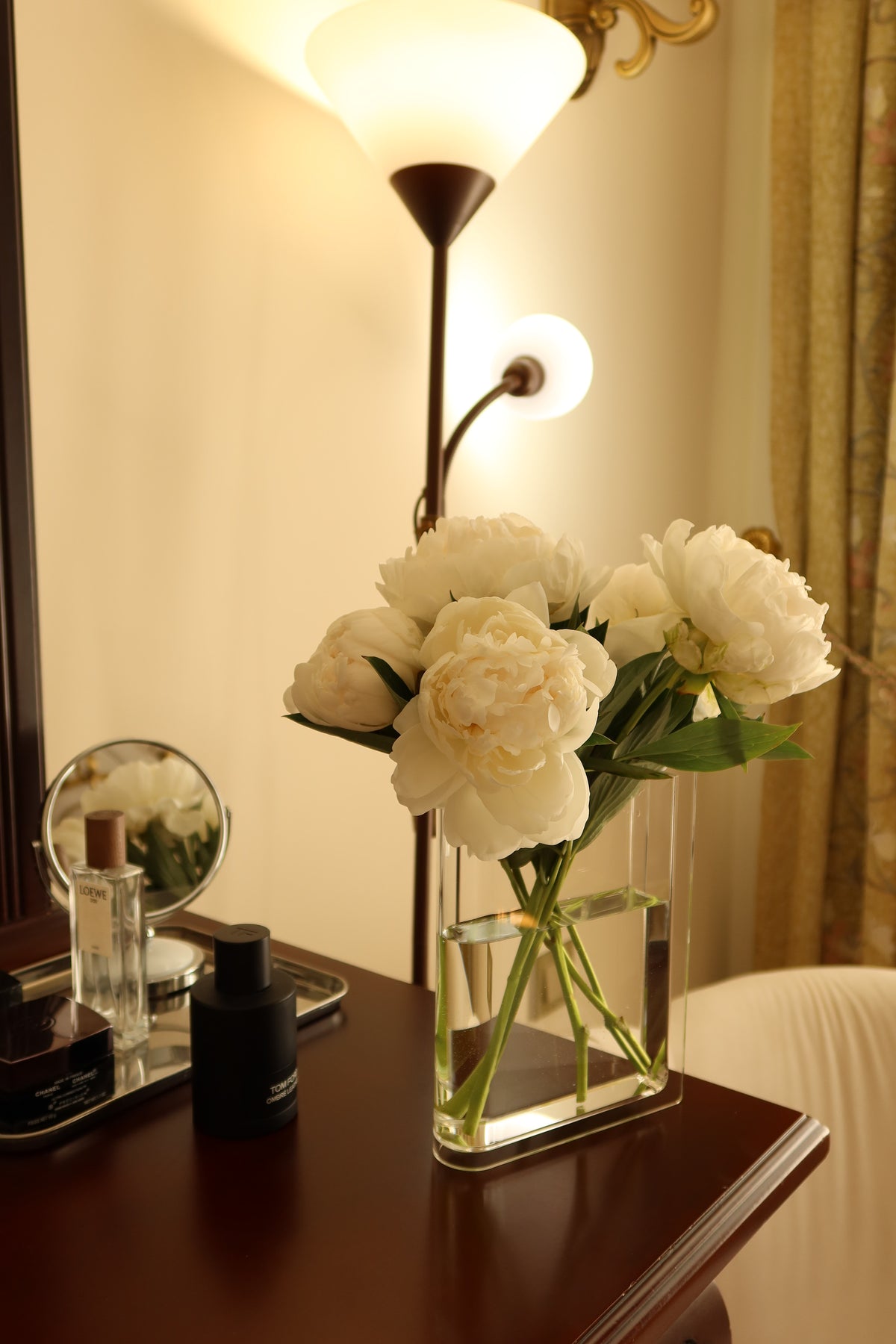
The frame is left empty on purpose.
The Archetype
Undated
The Muse
She is not a person. She is a posture — the one held by anyone who has stopped needing the room to agree with them.
We were asked once to name her, and declined. A named muse dates a brand to the decade she belonged to, and borrows a life that was never ours to borrow. What we are after is older and more useful than a biography.
Picture the archetype instead. She enters a room without adjusting anything in it. She owns few things and has had most of them a long time. She does not explain her choices, and she is not persuaded by objects that explain themselves — the ornate, the branded, the loudly expensive. What holds her attention is proportion, weight in the hand, and the way a surface behaves when the light drops.
Everything we design is made for her eye. Not because she is fashionable, but because that eye has been the same for four hundred years and will not move.
The Principles
Four rules, and no others.
01
Tactile Honesty
Objects must possess physical weight and material integrity. We work only with solid, high-density compounds that communicate luxury through touch, tone, and mass — never surface coatings or hollow imitations.
02
Architectural Presence
Every piece is engineered to hold a space on its own. We design objects that carry enough presence to anchor a blank console, an empty shelf, or a quiet corner without needing supporting decor.
03
Timeless Restraint
True elegance is defined by what is omitted. We reject seasonal trends and ornamental excess in favor of clean lines, proportion, and quiet confidence that remain relevant across decades.
04
Interaction with Light
A well-designed object changes throughout the day. We select and shape materials specifically for how they refract, absorb, or reflect low natural light, creating subtle shifts in atmosphere from dawn to dusk.
Fewer objects. Better made. Correctly placed.
Spring Renaissance